Category: News

  • Hand to Mouth: working with Keeley Forsyth

    Hand to Mouth: working with Keeley Forsyth

    This blog is a little look behind the scenes of Hand to Mouth, made in collaboration with vocalist and composer Keeley Forsyth

    After many years of working together as a duo, using a fold-up, portable harmonium, and later, with various expanded touring ensembles for Debris, Limbs, and The Hollow; we had long talked about returning to a collection of paired-back songs, and so Hand to Mouth represents a deliberately-lean selection of work, whilst reserving a number of songs not included on the EP exclusively for live performances.

    PROCESS

    Tracing

    I usually trace as closely as possible, Keeley’s initial demo recordings, with whichever instrument is closest to each, usually organ/harmonium/piano, and attempt to add touches of colour only sparsely. A conscious effort is made to enhance the demos through placement alone and avoid any attempt to perfect or polish the various quirks contained in the demos as far as possible, and to the point of learning the untamed push and pull of Keeley’s own hand (especially on Run Away). This approach is a suspension of refinement, and of technique, that come automatically through conditioned learning – forfeiting these so as to tell a different story. To studiously regulate quirks of timing, harmony, or form, is the easy way out. It’s more about being with what’s already there – exploiting only those qualities that possess a resonance within the source material itself.

    Ignis Fatuus 

    For those tracks starting out as open-ended solo piano / memorymoog pieces (Consider This, It Seems, I Have a Voice / Talk to Me), the vocal parts remain close to their first takes. For material originating from Keeley’s studio, any choices in orchestration and arrangement that accord to the first vocal takes, are ‘hung’ onto the notes themselves; and closely trace Keeley’s musical phrasing. Any subsequent vocal takes assuming a totally different character to an earlier version, are mapped onto their (unchanged) accompaniments, which speak to a now previous, illusory vocal (It Seems / Rain / Sing / Run Away).

    THE SONGS

    Consider This

    A deliberate exercise in creating a drone from upper and lower melodic parts to give the impression of something with more harminic movement than it actually has (similar to Unravelling*, from Photograph EP). The strengths of Keeley’s ideas lie in maintaining a fixed harmonic focal point. This characteristic opens up the possibilities of how to orchestrate (or not) a drone, or a consistent series of tones, without slipping into more studied musical avenues.

    *

    It Seems

      “Why can’t it just be two notes, or one chord?” 

    When I acquired a new piano, it took many months to get used to it – and as an exercise, set about recording an album’s-worth of music every night for a week. I needed to hear what the instrument could do from playing very singular, recognisable things (i.e., root-position major and minor chords sounded buoyant and possible on this instrument in a way that didn’t resonate as easily on the old piano), and opened up questions of pandering to any sense of melody or too much harmonic movement – preferring to settle for just one character, or texture, or harmony, or whatever. It Seems began as an eight-minute solo piano piece focusing solely on the irregular repetition created by two-handed playing of the interval of a fifth (B / F#). There was a willingness to let an indiscriminate, unsystematic way of playing the notes – letting go of trying to play something uniformly – that allowed an enjoyment of overtones and resonances for their own sake – and without habitually trying to make something else out of it. 

    Talk To Me

    At the time of sending over a folder of incomplete memorymoog pieces (for a forthcoming album), Keeley liked this one so much it became something new immediately…

    Rain

    This piece began as an electronic piece by Ross Downes, with a vocal from Keeley. Working directly from Keeley’s vocal lines, the piano part was hung onto each note/phrase for both verse and chorus sections (see notation, below). Having sat on the shelf for a few years, we decided to resurrect it for this collection with a new vocal part. The resulting new vocal made the idea of refining or altering the accompaniment, irrelevant (and a further example of an arrangement corresponding to both ‘ghost’ and new vocal takes).

    Anxiety

    I wanted to make a piece that started from within Keeley’s musical universe – and somehow dialled in to the spirit of some of the very first demo recordings sent over to me in 2016 at the beginning of our collaborative relationship* – pieces which lead on to working with Sam Hobbs for Keeley’s debut album, Debris. If I was to compare it to any one of those, it would be How Many Knives – a piece we have performed many times in duo. Perhaps better suited to harmonium or pump organ, this is an attempt at creating another uneven, untamed mesmeric at the piano.

    * (First sketch notation of demo material from 2016 – 1. One / 2. Debris / 3. untitled / 4. How Many Knives / 5. untitled / 6. Butterfly)

    Sing

    Sing emerged from one of Keeley’s demo recordings, but my accompaniment ventured off piste from the original, harmonically speaking – whilst still tracing the vocal, and locking into a to a fixed harmonic focal point. Also known as Creature – the final track from The Hollow this proceeding version ends with added cellos as a kind of coda section – giving a semblance of a larger arrangement.

    SCORES

    I’m uneasy about fixing a whole piece – rhythms, harmonies, and various nuances – through notation, from start to finish. I love the elliptic quality of a sketch, and anything sketch-like in their appearance (e.g., Frederico Mompou / Howard Skempton / Annette Peacock / Morton Feldman et al.). With a deliberate absence of common directions and signifiers in my own notation practice, the details inevitably choose themselves, make their own way though, and settle…

    Ross Downes and I hope to make these scores available as a limited-edition set of ‘pocket-sized’ cards, with the intention of providing the raw materials from which these pieces were originally conceived, for those who may be curious. Stay tuned! Below are a few more that we’ll play live, that are not included on Hand to Mouth, but will feature in the 2025 live shows.

    LIVE DATES

    MAY

    6 Arts Centre, Colchester, UK

    7 ACCA, Brighton, UK

    8 Chapter Arts Centre, Cardiff, CYM

    13 NCH Studio, Dublin, IE

    18 Howard Assembly Room, Leeds, UK

    20 Philharmonic Hall music Room, Liverpool, UK

    23 Hertz, Tivolivredenberg, Utrecht, NL

    AUGUST

    22 w/Keeley Forsyth, HAND TO MOUTH TOUR, Extramuralhaus Festival Gótico, Teatro José Lúcio da Silva, Leiria, PT

    SEPTEMBER

    9 St. Hidden Notes, Laurence Church, Stroud, UK

  • THIS IS NOT FOR YOU. 

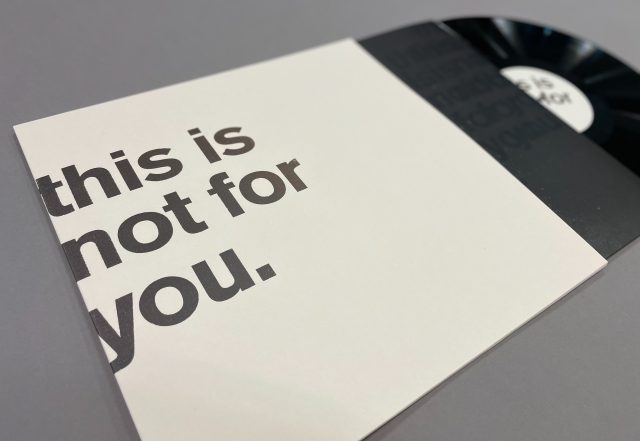
    THIS IS NOT FOR YOU. 

    “Don’t delete anything!” – Simon Ballard, Mute Song Publishing

    A SHORT NOTE ABOUT DEDICATIONS & TITLES

    I never sit and make music specifically for people – the music just appears. Then, once the pieces have been decided, and the sequencing of tracks begins, a period of reflective listening enables ideas, images, and people to appear. It is a search for how to embody/reflect/encapsulate the spirit of something, and /or someone in the title/dedication of the music itself. I also have a penchant for the French language, and words that are unusual or seldom used.

    ACTUALITIES & REFLECTIONS

    1. this is not for you

    This track is a fragment (originally entitled fragment). It used to be much longer, but a large section of improvisational driftwood was cut out, leaving only the most focused material – a vignette, if you like. Its main thematic statement is something I had written down in my notebook, and miraculously, played it (almost) note for note: 

    Dedication 

    .

    2. desinance iv.1 (for tommi grönlund)

    An alternate take from an album of the same name, released on Sähkö Recordings in (2021). The pieces, dedicated to Franck Vigroux, were all recorded as raw material for a project Franck and I were working on. Its default harmonic character is achieved by widening my hands to the limit of their span, and simply seeing what sort of sonorities emerge.

    Dedication

    Sähkö Recordings label founder Tommi Grönlund was keen to release much of the material in its complete form. This is an ‘alternate take’ of the fourth variation from that album, and is affectionately dedicated to Tommi, on account of his faith in the music at a time when I struggled to have any at all.

    3. to francesca

    A first take of another sketchbook idea – this time, a series of impulsive chords, notated with the intention of organising them at a later date (there was some attempt to order / attach a rhythmic value to them initially, as seen in the photograph below). My problem has always been that I do not possess the patience nor the will to settle the aforementioned, and so here they emerge as a spontaneous, notated embodiment of my indecision and lack of sustained effort to complete anything:

    Dedication

    To my oldest friend, Rev. Francesca Allison.

    4. the mirror and its fragments 

    An inverse approach to my usual piano-then-colour-in-with-the-cello approach. By recording the cello parts first, their function assumes a kind of malleable bedrock on which to place a number of atonal piano sonorities, whilst gradually and reluctantly encircling a harmonic resolution of sorts. 

    Title

    The title is of course taken from Part the First – Which Treats of The Mirror and its Fragments – taken from The Snow Queen, by Hans Andersen. No writer has ever encapsulated the malady of human depression so concisely.

    5. only when it is (in memoriam bill kinghorn)

    The take itself was amongst a handful of pieces I made for a TV documentary about the French painter and illustrator James Tissot. Despite the commission brief (whose instructions were to recreate the mood captured on an earlier album Isotach), it transpired that the commissioners didn’t want anything of the sort, and this particular improvisation was found lurking in a folder containing almost an hour of rejected piano pieces.

    Dedication

    William Kinghorn was a composer, pianist, and educator – and anyone who attended Leeds College of Music throughout the 70s-00s will have been inspired by this brilliant man’s tireless musical exploration and enigmatic teaching. Bill’s style was sage-like and elliptical – there were no easy answers, but encouraged a steady application of thought and uneasy work towards results that would provide nourishment for a lifetime of music-making. “…But only when it is!” – is one of many memorable aphorisms by him.

    6. eclipsis

    An opportunity arose to upgrade from my beloved Yamaha C3 to a Bösendorfer Imperial (made possible by the incredible generosity of Besbrode Pianos), and after it was installed, I had no idea how to play it… The two instruments were worlds apart, and so I set about making some pieces that didn’t do very much at all (some of these have now been absorbed into a forthcoming duo album with Keeley Forsyth), with this and other pieces from the same period being almost studies in challenging the importance, or rather, the habitual impulse towards melodicism for its own sake.

    7. dissemble (for brian irvine)

    Taken from Simon Ballard’s “Don’t delete anything!” session, dissemble is a fair illustration of how/why/when I choose to add cellos to an improvised piano piece. In this case, there were a few edits – small ‘corners’ that I felt didn’t really work, and so cut them out. to francesca, and Somewhere I have Never Travelled (from moogmemory), were both heavily reliant on this method as an arbitrary/intuitive way to build ‘compositional’ structure. 

    So, once a cut is made, it’s usually left as it is, however, there are instances where the join creates an unnatural shift in some way – so, in dissemble, the first entry of the cellos is to mask, or disguise an inadequacy that was particularly audible (to me, at least). Later on however, they are literally added to highlight a musical departure from the main character – to shine a spotlight on a climax point – and so literally traced the cello parts on to certain notes within the piano part(s):

    Dedication 

    Composer, conductor, and bandleader Brian Irvine has been a part of my life and musical universe for many years, and is both a link back to my familial roots in Ireland, and is also mentor to two of my oldest and most cherished musical colleagues – Dave Kane and Steve Davis. Brian’s loving and generous personality is a joy to orbit.

    8. precipice

    INTERNATIONAL ART ENGLISH VERSION: Precipice is dancing with irregularity, and a kind of study in the push and pull of things attempting to escape the confines of togetherness – towards collapse. 

    PLAIN ENGLISH VERSION: Because of my hugely flawed piano technique, I found myself battling with an unintended, rhythmic irregularity (between the right and left hands), but just went along with it. Starting over is to be avoided at any cost.

    précis

    Précis started out as a simple, pizzicato cello figure, and was going to leave it at that, but decided to track a melodic line over it in a single take straight after. It was windy outside. This melodic part is far from perfect (technically and sonically), but there seemed to be something there – so left it undisturbed. Striving to refine and perfect can often destroy some meaningful qualities that arise only through imperfection. Losing to the whim of polish, and to the conventions of technical excellence is, arguably, to hear a story untold (and the total and utter failure to perceive the truth in what is already there).

    9. dedicated to you, because you were listening (in memoriam keith tippett)

    This was one of a number of solo pieces I recorded (there were perhaps four in total) for no particular reason.

    Title & Dedication

    Keith Tippett‘s musicality and pianism were unmatched, and, after his untimely death a few years ago, wanted to gift this to him as a thank you note. I felt that Keith was (and is still) the only pianist who has ever acknowledged my musicality and validity as a piano player, and went out of his way to encourage me in what I was doing since our first meeting in my early twenties. Keith’s music is ultimate truth – the real thing. I can only continue, and to hope to aspire to the same qualities in my own music. For those of you familiar with Keith Tippett’s musical output, the title of this piece will be well understood.

  • Abreagierung 50°56’01.6″N 0°47’33.4”E + Daylight Music: The Church Tour

    Abreagierung 50°56’01.6″N 0°47’33.4”E + Daylight Music: The Church Tour

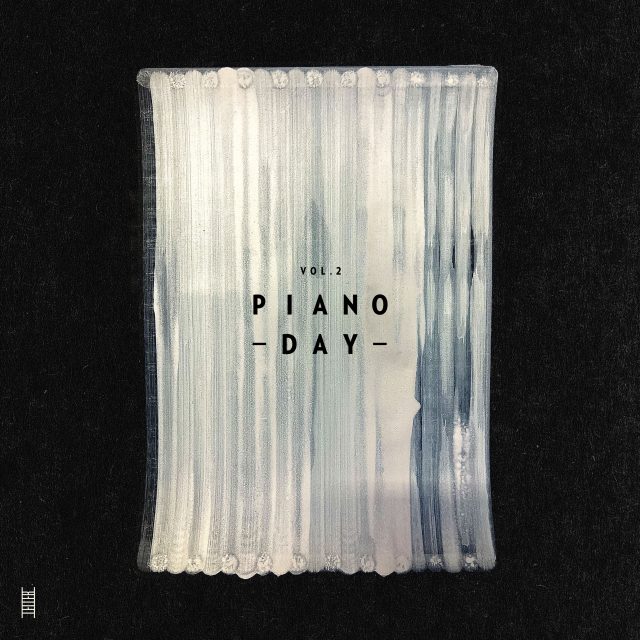
    Piano. Today is Piano Day. Happy Piano Day.

    Abreagierung 50°56’01.6″N 0°47’33.4”E is a piano + memorymoog track that now resides within the Piano Day Compilation Vol. 2 alongside some very distinguished artists, including Kaitlyn Aurelia Smith, Yann Tiersen, Hélène Vogelsinger, and others.

    This track would have otherwise been homeless had it not been for Nils Frahm and LEITER – thank you both for including it x

    DAYLIGHT MUSIC 359+360: The Church Tour

    THIS WEEKEND, I’ll be curating a quasi-antidote Piano Day event for Daylight Music on April 1 at St. John the Baptist’s Church, Leytonstone, and April 2 at The Hot Tin, Faversham. These are both pay-what-you-can, lunchtime events, so do come down, and see Iconoclast (Glen Leach, Emil Karlsen, me), GOTH RULLER, and the inscrutable, unapologetically-uncatagorisible Cataclysm Ensemble – featuring Nika Tikai, Teruki Suzuki, Sol Christopher, and other students currently studying at Leeds Conservatoire.

    “Go check out the Snowcat and the radio and you’ll see what I mean. GO CHECK IT OUT!” 

  • Bösendorfer Imperial – Photo Journal

    Bösendorfer Imperial – Photo Journal

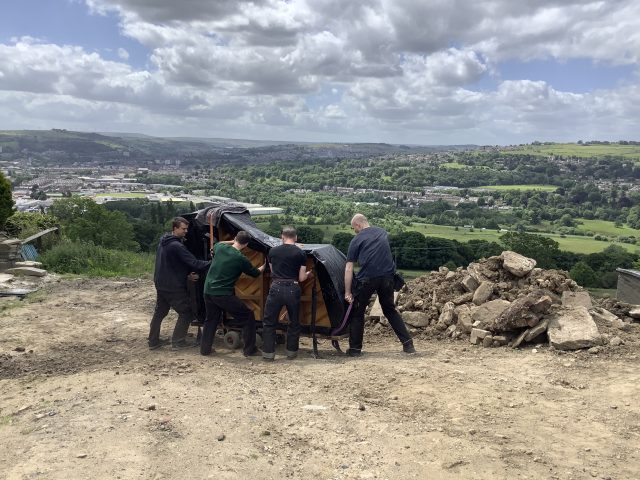
    Today was no ordinary Friday. For years I had only dreamed about the idea of building a studio, and even less the idea of anything like the instrument now sitting inside it. I’ll save talk of the build, and the instrument for future Blog instalments, but for now, figured a photo journal of today’s events might mark something, at least.

    This was undoubtedly one of the most audacious piano deliveries ever attempted in this postcode – and on a steep slope, with loose earth underfoot, and high winds, the team from Besbrode Pianos Leeds made light of the conditions, and are the absolute BEST (and they did it twice – removing my old Yamaha C3 from the house and into the studio via the same method).

    Don’t let the sunshine deceive you…

    I looked back through some old photographs and reminded myself what the space used to look like as a ramshackle garage, and the day that Paul Bolderson accompanied me here on my second viewing, and on entering the garage (and well out of earshot of its then owner), took me aside, and said through clenched teeth:

    “Why the fuck haven’t you bought this place already?!”

    He would have loved how it’s turned out. The traces of his friendship echo around the place as progress is made, and I have no doubt he would have loved being advisory site foreman, with perennial Cuppa Tea in hand… x

    (photographs by Jane Phipps)

  • Irrealis – new album + Piano Day solo concert

    Today sees the announcement of the latest release for The Leaf LabelIrrealis – a mini album of prepared piano pieces.

    Tonight, I’ll be carting my box of bolts, screws and Blu-Tack to the Howard Assembly Room, for a special Piano Day edition of Brudenell Piano Sessions – a series of monthly concerts with a piano focus, curated by pianist and composer Simeon Walker. Since its beginnings some years ago, this series has grown into a Leeds institution. Tonight’s show will also feature music by Simeon, Izzy Flynn and Alexander Carson.

  • The Embalmer – forthcoming duo album w/Emil Karlsen

    It is a real pleasure to be working with Emil Karlsen – who is arguably one of the most individual improvising musicians to have emerged onto the European scene in recent years. Emil and I got together and played some music sometime in 2020. The sessions were recorded and produced by Chris Sharkey, and the resulting improvisations form a kind of suite presented in this album format. Here’s a short video of the kind of thing you can expect to hear…

    The album is out on March 4th, and is currently available for pre-order via the Relative Pitch Bandcamp page. x

  • Désinances released on Sähkö Recordings

    Désinances is a collection of solo piano pieces taken from two contrasting recording sessions. The first was intended as a set of raw materials made specifically for a collaborative project with Franck Vigroux, and provided the impetus for the making of this album, with the second following on shortly afterwards. Both occasions yielded different musical results, yet possess a similar intention – owing something to the liminality of crepuscular daylight and the nighttime darkness during which they were both recorded.

    Much gratitude goes to Sam Hobbs for making the recordings sound fantastic, and to  Tommi Grönlund, whose fastidious attention to detail and belief in the music were essential to this project.

    Désinances 12″ black vinyl is now available from Sähkö Recordings.

  • Bandcamp Bundle + 1674 exclusive Fender Rhodes EP

    I hope that you are all keeping well, and have found the opportunity to tune in to all sorts of music these last few months – especially via Bandcamp and their generous gesture of waiving their fees for artists. Aside from today’s enticing all-inclusive bundle on offer from The Leaf Label, I have added a short set of impulsive music (pay-as-you-feel) especially for the occasion: 

    1674 is a collection of four solo Fender Rhodes improvisations – made several weeks ago whilst not intending to make anything in particular. I have always loved the Fender Rhodes, especially in combination with my battle-worn Roland Space Echo RE-201. It was way back in 2001 that The Electric. Dr. M made its eponymous debut, and the Fender Rhodes was my default gigging instrument. I had not previously considered it as a vehicle for solo performance, but these pieces might just be just the beginning of something…

    Each piece explores a different echo setting, and you will hear other quirks of the Fender Rhodes: the treble control hiss, the side-to-side panning of the tremolo circuit, crackling speakers, earth hum, mechanical noise from the keyboard action/key bed, distorted notes; and the indefinable, magical blurring (or ness) created by the combination of these two pieces of analogue equipment working together.

    The recordings are unadorned by post production or any kind of attempt to make them into something else. I hope that you will enjoy 1674 as a snapshot of two pieces of equipment in communion: a transparency sans artifice.

    M x

  • Keeley Forsyth: DEBRIS

    There are moments in one’s life that occur only once. Having the chance to collaborate with Keeley Forsyth is, unquestionably, one of the defining moments in my musical life to date. The first time I heard Keeley’s songs, they were impulsive recordings that had been performed directly into a laptop via its built-in microphone – yet the power and truth of her music shone through, audio fidelity notwithstanding. The task at hand was to keep the essence of these raw versions intact – trying my best to trace their contours using the usual working tools: piano, cello, harmonium, LAMM Memorymoog. Once this process was completed, I felt that the only person who could enhance these pieces further, was Sam Hobbs. Sam’s exceptional attention to musical detail enabled many more avenues to be explored, and, in tandem with Keeley’s seemingly effortless ability to quickly produce ideas of such high-quality, time and time again; a large number of tracks began to appear. Also featured on the album is the beautiful guitar playing of guitarist Mark Creswell – bringing his understated virtuosity to bear on It’s Raining, Look to Yourself, and Black Bull.


    Most of all, it is the degree of truth present in Keeley’s voice that never ceases to amaze me (I have cried countless times listening to Lost, for example). Once in a lifetime… Please do seek out the full album, give it a spin, and simply allow the songs to percolate through in their own time, and I hope that you enjoy the discovery of Keeley’s music with as much pleasure as we have all had making it. x

  • October Concerts: Mike Westbrook / Keith Tippet

    SO… Mike Westbrook’s music changed my way of hearing music when I was a student at Leeds College of Music, and Keith Tippett is the reason I play the piano the way I do. And, if that weren’t enough, I am appearing under their auspices within one week of each other. First up:

    OCTOBER 6 – THE WESTBROOK BLAKE, St. Peter’s Church, Bournemouth 

    I’d been in correspondence with Mike over the last few months re working together on something, then one day asked if I would step in for him on this concert, which happens to be on my birthday. How could I refuse? Not only that, but I also get to appear in the distinguished company of musicians Kate Westbrook, Phil Minton, Christ Biscoe, Steve Berry, and Billy Thompson. Plus a full choir…


    OCTOBER 14 – w/KEITH TIPPETT, St. Bartholomew’s Church, Marsden

    Having played a good few times in Bristol before our debut at last year’s London Jazz Festival, we are looking forward to getting back into the swing of things, again, this time in the beautiful setting of St. Bartholomew’s church in Marsden. This will be Keith’s first appearance for a good while, so come along to this one; it’s going to be rather special. With a series of concerts planned for Spring 2019, stay tuned for more news and announcements.

    See you at one/other/both of these concerts x