Blog

  • Hand to Mouth: working with Keeley Forsyth

    Hand to Mouth: working with Keeley Forsyth

    This blog is a little look behind the scenes of Hand to Mouth, made in collaboration with vocalist and composer Keeley Forsyth

    After many years of working together as a duo, using a fold-up, portable harmonium, and later, with various expanded touring ensembles for Debris, Limbs, and The Hollow; we had long talked about returning to a collection of paired-back songs, and so Hand to Mouth represents a deliberately-lean selection of work, whilst reserving a number of songs not included on the EP exclusively for live performances.

    PROCESS

    Tracing

    I usually trace as closely as possible, Keeley’s initial demo recordings, with whichever instrument is closest to each, usually organ/harmonium/piano, and attempt to add touches of colour only sparsely. A conscious effort is made to enhance the demos through placement alone and avoid any attempt to perfect or polish the various quirks contained in the demos as far as possible, and to the point of learning the untamed push and pull of Keeley’s own hand (especially on Run Away). This approach is a suspension of refinement, and of technique, that come automatically through conditioned learning – forfeiting these so as to tell a different story. To studiously regulate quirks of timing, harmony, or form, is the easy way out. It’s more about being with what’s already there – exploiting only those qualities that possess a resonance within the source material itself.

    Ignis Fatuus 

    For those tracks starting out as open-ended solo piano / memorymoog pieces (Consider This, It Seems, I Have a Voice / Talk to Me), the vocal parts remain close to their first takes. For material originating from Keeley’s studio, any choices in orchestration and arrangement that accord to the first vocal takes, are ‘hung’ onto the notes themselves; and closely trace Keeley’s musical phrasing. Any subsequent vocal takes assuming a totally different character to an earlier version, are mapped onto their (unchanged) accompaniments, which speak to a now previous, illusory vocal (It Seems / Rain / Sing / Run Away).

    THE SONGS

    Consider This

    A deliberate exercise in creating a drone from upper and lower melodic parts to give the impression of something with more harminic movement than it actually has (similar to Unravelling*, from Photograph EP). The strengths of Keeley’s ideas lie in maintaining a fixed harmonic focal point. This characteristic opens up the possibilities of how to orchestrate (or not) a drone, or a consistent series of tones, without slipping into more studied musical avenues.

    *

    It Seems

      “Why can’t it just be two notes, or one chord?” 

    When I acquired a new piano, it took many months to get used to it – and as an exercise, set about recording an album’s-worth of music every night for a week. I needed to hear what the instrument could do from playing very singular, recognisable things (i.e., root-position major and minor chords sounded buoyant and possible on this instrument in a way that didn’t resonate as easily on the old piano), and opened up questions of pandering to any sense of melody or too much harmonic movement – preferring to settle for just one character, or texture, or harmony, or whatever. It Seems began as an eight-minute solo piano piece focusing solely on the irregular repetition created by two-handed playing of the interval of a fifth (B / F#). There was a willingness to let an indiscriminate, unsystematic way of playing the notes – letting go of trying to play something uniformly – that allowed an enjoyment of overtones and resonances for their own sake – and without habitually trying to make something else out of it. 

    Talk To Me

    At the time of sending over a folder of incomplete memorymoog pieces (for a forthcoming album), Keeley liked this one so much it became something new immediately…

    Rain

    This piece began as an electronic piece by Ross Downes, with a vocal from Keeley. Working directly from Keeley’s vocal lines, the piano part was hung onto each note/phrase for both verse and chorus sections (see notation, below). Having sat on the shelf for a few years, we decided to resurrect it for this collection with a new vocal part. The resulting new vocal made the idea of refining or altering the accompaniment, irrelevant (and a further example of an arrangement corresponding to both ‘ghost’ and new vocal takes).

    Anxiety

    I wanted to make a piece that started from within Keeley’s musical universe – and somehow dialled in to the spirit of some of the very first demo recordings sent over to me in 2016 at the beginning of our collaborative relationship* – pieces which lead on to working with Sam Hobbs for Keeley’s debut album, Debris. If I was to compare it to any one of those, it would be How Many Knives – a piece we have performed many times in duo. Perhaps better suited to harmonium or pump organ, this is an attempt at creating another uneven, untamed mesmeric at the piano.

    * (First sketch notation of demo material from 2016 – 1. One / 2. Debris / 3. untitled / 4. How Many Knives / 5. untitled / 6. Butterfly)

    Sing

    Sing emerged from one of Keeley’s demo recordings, but my accompaniment ventured off piste from the original, harmonically speaking – whilst still tracing the vocal, and locking into a to a fixed harmonic focal point. Also known as Creature – the final track from The Hollow this proceeding version ends with added cellos as a kind of coda section – giving a semblance of a larger arrangement.

    SCORES

    I’m uneasy about fixing a whole piece – rhythms, harmonies, and various nuances – through notation, from start to finish. I love the elliptic quality of a sketch, and anything sketch-like in their appearance (e.g., Frederico Mompou / Howard Skempton / Annette Peacock / Morton Feldman et al.). With a deliberate absence of common directions and signifiers in my own notation practice, the details inevitably choose themselves, make their own way though, and settle…

    Ross Downes and I hope to make these scores available as a limited-edition set of ‘pocket-sized’ cards, with the intention of providing the raw materials from which these pieces were originally conceived, for those who may be curious. Stay tuned! Below are a few more that we’ll play live, that are not included on Hand to Mouth, but will feature in the 2025 live shows.

    LIVE DATES

    MAY

    6 Arts Centre, Colchester, UK

    7 ACCA, Brighton, UK

    8 Chapter Arts Centre, Cardiff, CYM

    13 NCH Studio, Dublin, IE

    18 Howard Assembly Room, Leeds, UK

    20 Philharmonic Hall music Room, Liverpool, UK

    23 Hertz, Tivolivredenberg, Utrecht, NL

    AUGUST

    22 w/Keeley Forsyth, HAND TO MOUTH TOUR, Extramuralhaus Festival Gótico, Teatro José Lúcio da Silva, Leiria, PT

    SEPTEMBER

    9 St. Hidden Notes, Laurence Church, Stroud, UK

  • THIS IS NOT FOR YOU. 

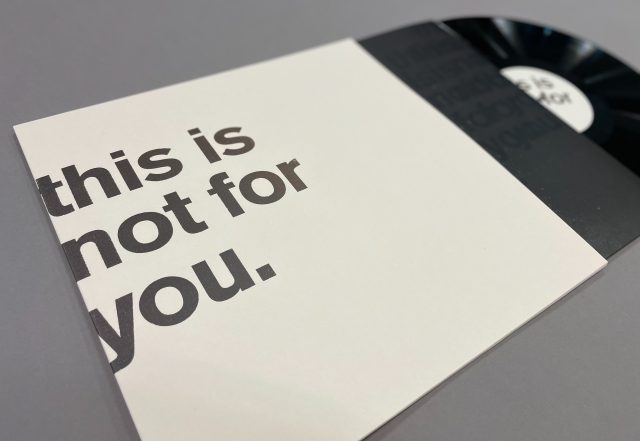
    THIS IS NOT FOR YOU. 

    “Don’t delete anything!” – Simon Ballard, Mute Song Publishing

    A SHORT NOTE ABOUT DEDICATIONS & TITLES

    I never sit and make music specifically for people – the music just appears. Then, once the pieces have been decided, and the sequencing of tracks begins, a period of reflective listening enables ideas, images, and people to appear. It is a search for how to embody/reflect/encapsulate the spirit of something, and /or someone in the title/dedication of the music itself. I also have a penchant for the French language, and words that are unusual or seldom used.

    ACTUALITIES & REFLECTIONS

    1. this is not for you

    This track is a fragment (originally entitled fragment). It used to be much longer, but a large section of improvisational driftwood was cut out, leaving only the most focused material – a vignette, if you like. Its main thematic statement is something I had written down in my notebook, and miraculously, played it (almost) note for note: 

    Dedication 

    .

    2. desinance iv.1 (for tommi grönlund)

    An alternate take from an album of the same name, released on Sähkö Recordings in (2021). The pieces, dedicated to Franck Vigroux, were all recorded as raw material for a project Franck and I were working on. Its default harmonic character is achieved by widening my hands to the limit of their span, and simply seeing what sort of sonorities emerge.

    Dedication

    Sähkö Recordings label founder Tommi Grönlund was keen to release much of the material in its complete form. This is an ‘alternate take’ of the fourth variation from that album, and is affectionately dedicated to Tommi, on account of his faith in the music at a time when I struggled to have any at all.

    3. to francesca

    A first take of another sketchbook idea – this time, a series of impulsive chords, notated with the intention of organising them at a later date (there was some attempt to order / attach a rhythmic value to them initially, as seen in the photograph below). My problem has always been that I do not possess the patience nor the will to settle the aforementioned, and so here they emerge as a spontaneous, notated embodiment of my indecision and lack of sustained effort to complete anything:

    Dedication

    To my oldest friend, Rev. Francesca Allison.

    4. the mirror and its fragments 

    An inverse approach to my usual piano-then-colour-in-with-the-cello approach. By recording the cello parts first, their function assumes a kind of malleable bedrock on which to place a number of atonal piano sonorities, whilst gradually and reluctantly encircling a harmonic resolution of sorts. 

    Title

    The title is of course taken from Part the First – Which Treats of The Mirror and its Fragments – taken from The Snow Queen, by Hans Andersen. No writer has ever encapsulated the malady of human depression so concisely.

    5. only when it is (in memoriam bill kinghorn)

    The take itself was amongst a handful of pieces I made for a TV documentary about the French painter and illustrator James Tissot. Despite the commission brief (whose instructions were to recreate the mood captured on an earlier album Isotach), it transpired that the commissioners didn’t want anything of the sort, and this particular improvisation was found lurking in a folder containing almost an hour of rejected piano pieces.

    Dedication

    William Kinghorn was a composer, pianist, and educator – and anyone who attended Leeds College of Music throughout the 70s-00s will have been inspired by this brilliant man’s tireless musical exploration and enigmatic teaching. Bill’s style was sage-like and elliptical – there were no easy answers, but encouraged a steady application of thought and uneasy work towards results that would provide nourishment for a lifetime of music-making. “…But only when it is!” – is one of many memorable aphorisms by him.

    6. eclipsis

    An opportunity arose to upgrade from my beloved Yamaha C3 to a Bösendorfer Imperial (made possible by the incredible generosity of Besbrode Pianos), and after it was installed, I had no idea how to play it… The two instruments were worlds apart, and so I set about making some pieces that didn’t do very much at all (some of these have now been absorbed into a forthcoming duo album with Keeley Forsyth), with this and other pieces from the same period being almost studies in challenging the importance, or rather, the habitual impulse towards melodicism for its own sake.

    7. dissemble (for brian irvine)

    Taken from Simon Ballard’s “Don’t delete anything!” session, dissemble is a fair illustration of how/why/when I choose to add cellos to an improvised piano piece. In this case, there were a few edits – small ‘corners’ that I felt didn’t really work, and so cut them out. to francesca, and Somewhere I have Never Travelled (from moogmemory), were both heavily reliant on this method as an arbitrary/intuitive way to build ‘compositional’ structure. 

    So, once a cut is made, it’s usually left as it is, however, there are instances where the join creates an unnatural shift in some way – so, in dissemble, the first entry of the cellos is to mask, or disguise an inadequacy that was particularly audible (to me, at least). Later on however, they are literally added to highlight a musical departure from the main character – to shine a spotlight on a climax point – and so literally traced the cello parts on to certain notes within the piano part(s):

    Dedication 

    Composer, conductor, and bandleader Brian Irvine has been a part of my life and musical universe for many years, and is both a link back to my familial roots in Ireland, and is also mentor to two of my oldest and most cherished musical colleagues – Dave Kane and Steve Davis. Brian’s loving and generous personality is a joy to orbit.

    8. precipice

    INTERNATIONAL ART ENGLISH VERSION: Precipice is dancing with irregularity, and a kind of study in the push and pull of things attempting to escape the confines of togetherness – towards collapse. 

    PLAIN ENGLISH VERSION: Because of my hugely flawed piano technique, I found myself battling with an unintended, rhythmic irregularity (between the right and left hands), but just went along with it. Starting over is to be avoided at any cost.

    précis

    Précis started out as a simple, pizzicato cello figure, and was going to leave it at that, but decided to track a melodic line over it in a single take straight after. It was windy outside. This melodic part is far from perfect (technically and sonically), but there seemed to be something there – so left it undisturbed. Striving to refine and perfect can often destroy some meaningful qualities that arise only through imperfection. Losing to the whim of polish, and to the conventions of technical excellence is, arguably, to hear a story untold (and the total and utter failure to perceive the truth in what is already there).

    9. dedicated to you, because you were listening (in memoriam keith tippett)

    This was one of a number of solo pieces I recorded (there were perhaps four in total) for no particular reason.

    Title & Dedication

    Keith Tippett‘s musicality and pianism were unmatched, and, after his untimely death a few years ago, wanted to gift this to him as a thank you note. I felt that Keith was (and is still) the only pianist who has ever acknowledged my musicality and validity as a piano player, and went out of his way to encourage me in what I was doing since our first meeting in my early twenties. Keith’s music is ultimate truth – the real thing. I can only continue, and to hope to aspire to the same qualities in my own music. For those of you familiar with Keith Tippett’s musical output, the title of this piece will be well understood.

  • 2024 Leaf Label Releases

    2024 Leaf Label Releases

    MINING – Chimet

    After a lengthy gestation, and many years in the making, Chimet has already been making waves(!) digitally, but is soon to be available on CD (and in a unique double-LP format) from May 17th. It’s a project involving myself, Craig Kirkpatrick-Whitby, and PJ Davy. Together, we have endeavoured to bring our varied interests of the sea, sailing, data, and electronic music together to make something that, although driven by a large set of sea data, aspires to be musically emotive, and compelling enough to bear many repeated listens(!). 

    You can find out more about the project on the MINING Bandcamp page (all orders placed will be delivered by the May 17th).


    NIGHTPORTS w/MATTHEW BOURNE – Dulcitone 1804

    Made in a single day, this is the latest offering from an ongoing collaboration with Nightports (Adam Martin & Mark Slater), and is scheduled for release on May 24th. As far as we know, this is the first album to have been made featuring the Dulcitone as a solo instrument… 

    Here’s an attempt to explain everything about the Dulcitone, and the process behind the music:

    Machell will be available on all DSPs, so do head on over to the Nightports Bandcamp page to listen and pre-order the full album.

    For those of you in the north, we’ll be bringing this to the Brudenell Piano Sessions at Howard Assembly Room in Leeds, June 9th. 

  • Abreagierung 50°56’01.6″N 0°47’33.4”E + Daylight Music: The Church Tour

    Abreagierung 50°56’01.6″N 0°47’33.4”E + Daylight Music: The Church Tour

    Piano. Today is Piano Day. Happy Piano Day.

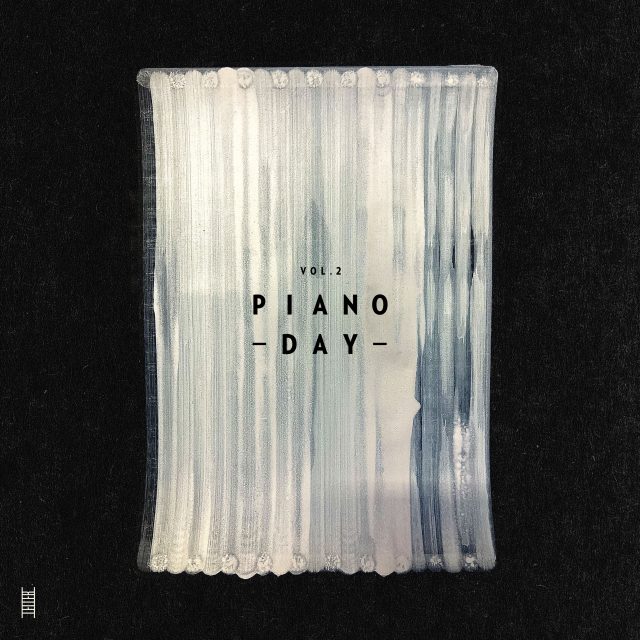
    Abreagierung 50°56’01.6″N 0°47’33.4”E is a piano + memorymoog track that now resides within the Piano Day Compilation Vol. 2 alongside some very distinguished artists, including Kaitlyn Aurelia Smith, Yann Tiersen, Hélène Vogelsinger, and others.

    This track would have otherwise been homeless had it not been for Nils Frahm and LEITER – thank you both for including it x

    DAYLIGHT MUSIC 359+360: The Church Tour

    THIS WEEKEND, I’ll be curating a quasi-antidote Piano Day event for Daylight Music on April 1 at St. John the Baptist’s Church, Leytonstone, and April 2 at The Hot Tin, Faversham. These are both pay-what-you-can, lunchtime events, so do come down, and see Iconoclast (Glen Leach, Emil Karlsen, me), GOTH RULLER, and the inscrutable, unapologetically-uncatagorisible Cataclysm Ensemble – featuring Nika Tikai, Teruki Suzuki, Sol Christopher, and other students currently studying at Leeds Conservatoire.

    “Go check out the Snowcat and the radio and you’ll see what I mean. GO CHECK IT OUT!” 

  • Bösendorfer Imperial – Photo Journal

    Bösendorfer Imperial – Photo Journal

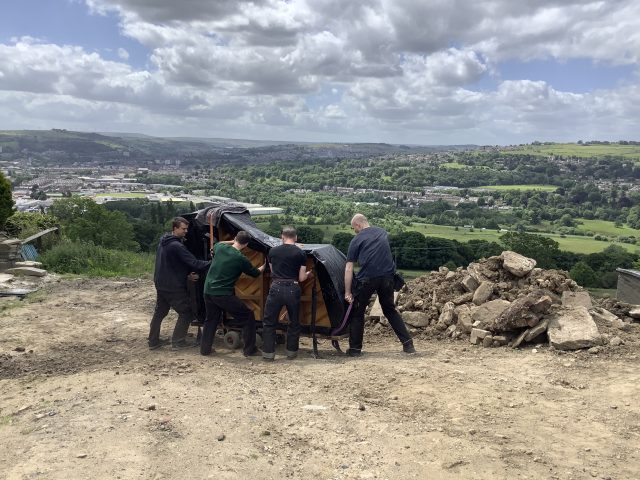
    Today was no ordinary Friday. For years I had only dreamed about the idea of building a studio, and even less the idea of anything like the instrument now sitting inside it. I’ll save talk of the build, and the instrument for future Blog instalments, but for now, figured a photo journal of today’s events might mark something, at least.

    This was undoubtedly one of the most audacious piano deliveries ever attempted in this postcode – and on a steep slope, with loose earth underfoot, and high winds, the team from Besbrode Pianos Leeds made light of the conditions, and are the absolute BEST (and they did it twice – removing my old Yamaha C3 from the house and into the studio via the same method).

    Don’t let the sunshine deceive you…

    I looked back through some old photographs and reminded myself what the space used to look like as a ramshackle garage, and the day that Paul Bolderson accompanied me here on my second viewing, and on entering the garage (and well out of earshot of its then owner), took me aside, and said through clenched teeth:

    “Why the fuck haven’t you bought this place already?!”

    He would have loved how it’s turned out. The traces of his friendship echo around the place as progress is made, and I have no doubt he would have loved being advisory site foreman, with perennial Cuppa Tea in hand… x

    (photographs by Jane Phipps)

  • Making Irrealis

    DÉBUT

    FRIENDSHIP, COLLABORATION, AND THE UNREAL

    These pieces were made barely moments after recording a piece for another project – caught impulsively, but also on the precipice of velleity from which much of my work seems to emerge. There is a liminality to these proceedings, but on the conclusion of each piece, there seemed an impetus to continue onto the next, and again to the next. Recorded in one sitting, these seven pieces are meditations of a sort, each possessing an implicit musical character that is dedicated to those individuals to whom I feel the music belongs.

    My own Public Relations blurb above is not an accurate account of how the music came into being. The following is an attempt to discuss the resulting music through the mechanisms of friendship and collaboration, the slippery meaning behind the album title, the whys and hows of deciding on whom to gift my music; and how the physicalisation of all this was mirrored in the making of the album artwork.

    INTERIORITY LEADS THE WAY – Robert Bresson

    All of this started way back (exactly ten years ago), when a gentleman came to buy a synthesiser from me on a particularly hostile evening, clutching a cache of records under his arm… Little did I know that this was Glenn Armstrong – aesthete, curator, producer, founder of Coup D’Archet record label, lovely human being. I had no idea that this meeting would also lead to a very dear friendship, and even less that we would collaborate on one of the most unique and extraordinary projects I’ve ever been involved with. The work in question (let’s call it Project S) is firmly under wraps for the time being, but I’m mentioning it here because it is precisely the journey of our friendship, and of the ups and downs of making work together that led directly to the music on Irrealis. 

    In short, these pieces resulted because of a failed attempt to remedy a wobbly track, and to divine a similar spirit to the Project S recording sessions that had taken place some twelve months prior. Although this track fix was out of my reach, it was the weight of experience only an intense immersion (of many years) in a substantive project that brought about the setting in which this music could emerge.

    I owe much to the assignment of my collaborator in that these pieces are succinct, impulsive, and are contrasting in narrative, melodic sensibility, and harmonic character to the subject of Project S, and emerge from a quality of lack, or absence. My view here is that music is more of an appearance from a reassembled table of contents, or scrobbled inventory of experience. It is a meshwork of practice, communion with the piano, thinking, listening, and refining or building through abstract means, those links and bridges between disparate ideas; and sometimes of holding on to the threads of things heard and noted years ago, only for them to reemerge, refracted through the physicalisation of performance in the present. By acknowledging an absence of intent (velleity), I also acknowledge the Catch-22 that Irrealis was only possible due to the significance of friendship(s), and the weight of preceding simpatico collaborative work (not to mention the consumption of a shit-ton of Co-Op Viognier, C19th literature, art, discussions about modernist furniture, Full-English breakfasts, Alfred Deller, 1960s/1970s British Jazz, Samson François, and rare vinyl heard through some of the finest valve HiFi amplifiers courtesy of Gary Wood). 

    With all of this now in focus, what follows is a brief account of how these things are realised through performative mechanisms.

    COMMUNION

    With the piano already prepared, failed attempts recorded – the seven consecutive improvisations that followed capture the sound of exploring a new instrument for the first time. Placing foreign objects on/in between the piano strings is not my usual style – preferring the limitation of bare hands and the possibility of bloody injury…

    Pianist and composer Keith Tippett was someone who also favoured the alteration of a conventional piano sound to introduce different ‘characters’ into a performance – his own solution to the problem of ‘fixed’ preparations (the insertion of screws, nuts, bolts etc. can be time consuming to set up, and almost as long to remove, depending on the situation), was through utilising light pieces of wood, large pebbles, music boxes, plastic toys etc., that could be easily placed/removed. Here though, I approximated the setup from the original Project S sessions:

    PROJECT S

    IRREALIS

    THE FIRST IDEA

    Each of the pieces begin with what I refer to as the first idea, which is simply a way to describe the act of surrender by deliberate listening to whatever sound(s) arise in the first instance, intentional or otherwise (it is often those which arise unintentionally that are of most use or interest to an improviser). It’s a kind of bearing witness to sound, and then committing to following its lead over any preconceived ideas that might have arisen otherwise. In addition, the piano on Irrealis was only prepared from the middle C key upwards (the lowest note in the aforementioned Project S piece). Aside from Jane, all of the pieces are played with middle C as the lowest note – with the reduced range providing useful limitation. 

    TITLE

    Irrealis is a grammatical marker / set of linguistic moods that refer to any clause that may be imaginary instead of actually true / indicate action(s) that are not known to have occurred at the moment the speaker is talking. It is also the title of a poem by Dorothy Lehane, taken from Places of Articulation (Dancing Girl Press, 2014). The following paragraph retrospectively forces a definition onto the music – creating a bullshit narrative which implies that I chose this word deliberately – over simply appropriating it because I liked its ambiguity and irrelevance:

    Irrealis also describes, in a lateral sense, my own process of musicking – where personal communion with, or escape, into the intangible / invisible world of sound is a place of unconditional trust and truth. I cannot however commune and receive simultaneously. It is only through recording, and listening afterwards, that a temporary glimpse into this irreal universe is possible, where the outcome often appears imaginary, or dream-like in the real world. And whilst we’re at it, these pieces are also an expression of sonic unreality; a hybrid created by an interdependence of conventional piano architecture, some Blu-Tack, and a few packs of M6 roof bolts from B&Q.

    DEDICATION

    I’m rather fond of dedicating or gifting my work to those who are/have been significant to me (most often the latter), extending to anyone who has had an involvement in or around the time of making the music, listed under ‘personal gratitude’ somewhere on the album sleeve(s). The process usually involves listening to any given piece several times until it evokes the idea of something, or someone – followed by a shortlist, then leaving it for a few days until making the final decision. A while ago I figured that most titles of anything are always abstract, and so why not be named after people? My official quip about dedications is that you don’t want one – with most dedicatees being either ex-girlfriends or dead (but curiously never a combination of both). There are however exceptions to this rule, especially in Irrealis, where the ratio of ex-girlfriend/dead : living is 2 : 7.

    • Jane is for my mother; 

    • Laurent Dehors is a kindred spirit. I love him dearly, and feel blessed to have known him and played so much incredible music with him over the last sixteen years; 

    • Alice is an ex, yet thankfully we remain friends; 

    • Armando is dedicated to the late pioneering jazz pianist Armando Anthony ‘Chick’ Corea – I’ve long enjoyed his music, and this dedication is made on account of the presence of some ‘Chick-sounding’ right hand phrases.

    ART

    SPLIT & THE PEOPLE POWERED PRESS

    Oli Bentley is founder of Split, an independent design studio based at Salts Works, West Yorkshire – and is also home to the largest letterpress in the World – the People Powered Press. Oli wanted to make a letterpress printing that mirrored the quick, impulsive approach to preparing the piano and making the music, and thus used a selection of wood and metal type, and other letterpress wood blocks – all originally destined for use in other ways. The design was made entirely in the bed of the printing press, and without any sort of digital mock up or design beforehand.

    If you look closely, you can also see guitarist/vocalist Jon Gomm’s very own signature plectrum. Jon is an old friend, and he just so happened to be crossing the road outside. This serendipitous meeting meant that he had to be involved: creative work as an extension of human relationships…

    You said it was like some sort of dream

    (how are you at endings?)

    FIN

  • Irrealis – new album + Piano Day solo concert

    Today sees the announcement of the latest release for The Leaf LabelIrrealis – a mini album of prepared piano pieces.

    Tonight, I’ll be carting my box of bolts, screws and Blu-Tack to the Howard Assembly Room, for a special Piano Day edition of Brudenell Piano Sessions – a series of monthly concerts with a piano focus, curated by pianist and composer Simeon Walker. Since its beginnings some years ago, this series has grown into a Leeds institution. Tonight’s show will also feature music by Simeon, Izzy Flynn and Alexander Carson.

  • The Embalmer – forthcoming duo album w/Emil Karlsen

    It is a real pleasure to be working with Emil Karlsen – who is arguably one of the most individual improvising musicians to have emerged onto the European scene in recent years. Emil and I got together and played some music sometime in 2020. The sessions were recorded and produced by Chris Sharkey, and the resulting improvisations form a kind of suite presented in this album format. Here’s a short video of the kind of thing you can expect to hear…

    The album is out on March 4th, and is currently available for pre-order via the Relative Pitch Bandcamp page. x

  • Désinances released on Sähkö Recordings

    Désinances is a collection of solo piano pieces taken from two contrasting recording sessions. The first was intended as a set of raw materials made specifically for a collaborative project with Franck Vigroux, and provided the impetus for the making of this album, with the second following on shortly afterwards. Both occasions yielded different musical results, yet possess a similar intention – owing something to the liminality of crepuscular daylight and the nighttime darkness during which they were both recorded.

    Much gratitude goes to Sam Hobbs for making the recordings sound fantastic, and to  Tommi Grönlund, whose fastidious attention to detail and belief in the music were essential to this project.

    Désinances 12″ black vinyl is now available from Sähkö Recordings.

  • Studio Build Part I // Not making a brick but building a wall

    INTROIT

    What follows is a sort of photo blog, chronicling the period between April-December 2020. This was time spent neither making any new music, nor being particularly creative.

    I felt a sense that this is what was expected of musicians (or of myself) – as if the pandemic has presented an unmissable and golden opportunity to create, to invent radical ways of expressing one’s creativity through a series of meaningful musical statements, and as musicians, we should make it our duty to rise to this occasion, or something. I’m being deliberately obtuse, but this is only as I felt the pressure to create at a time where there was no excuse not to. These circumstances have had the opposite effect, and permitted a stillness and the suspension of being habitually musical for a little while. Suddenly there was time to reimagine, reassess and reaffirm immediate surroundings after almost twenty years of physical transience, collaboration, travel, and communing with the invisible power in music. Instead, I have swapped this for communing with the very literal bedrock on which my home rests – moving vast quantities of earth and stone to create and alter a physical space, and perhaps uncovering opportunities to learn something about myself whilst doing it.

    In short, I’m building a studio, and have decided to chart its progress through a series of blogs – mainly as not to forget what / how things happened, and also as it’s a useful place to gather images captured during the work itself.  The very opposite of Grand Designs magazine (they rarely if ever show photographs other than the completed project). First, the access to the house itself had to be widened, making it easier for site vehicles to enter. Before launching into detail, an epiphany from March 2020:

    NO ONE ELSE IS GOING TO HELP YOU

    Although I’ve learned much from the endeavours that follow, letting go of the concept that others might blindly help you out – professional or otherwise; was a rare moment of clarity. Almost everything that follows (save for the wall rebuild), was done by hand, and was done alone.

    THE WORK

    Previously, the swing-round up to the driveway entrance was extremely problematic for most vehicles. A newly-erected fence to the left of the approach made access by anything exceeding the wheelbase dimensions of a small transit van virtually impossible. Removing the gate/gatepost didn’t really make much difference.


    Note the lower wall/raised garden area leading to the coal sheds, and beyond that – one of two 13+ft Leylandii hedgerows.

    LEYLANDII HEDGEROW REMOVAL – BEFORE / AFTER


    (UN)CONTROLLED SHED DEMOLITION & WALL #1 DISASSEMBLY

    With the trees removed, attention was turned to demolishing the sheds at the head of the wall, behind which stood a 1200-litre oil tank, which was then sold on eBay, along with the external boiler, for £500.


    It was then collected by a couple who PUSHED the tank from the house almost half a mile to the main road and into a truck that wouldn’t fit down the lane. They were able to heat their water thenceforth, and I looked forward to cold showers for at least the following month.


    With the demolition of stone buildings, chipping off old mortar/cement from the stone by hand was needed so it can be reused for dry stone walling. Taking around a day and a half to clean the stone with a lump hammer and chisel was a strangely meditative act. Stone by stone, all of the lower wall was disassembled, exposing the earth/bank behind it. Up to this point, all of this work was done without machinery – everything completed by hand/wheelbarrow, save for those occasions where a garden tractor and trailer was used to move loose stone to the ever-growing piles of stone around the house.

    JCB 8014 – ACQUISITION / OPERATION

    Three separate people advised purchasing a mini excavator as a way to save on throwing money away on operator/hire costs for the duration of the project ahead. As plant machinery depreciates much slower than cars, for example, I stand to sell it at not too much less than I paid for it. Although I now love it too much to think of parting with it…

    At no point in my life to date did I ever think I would purchase a JCB after viewing a two-minute WhatsApp video of it in action from Matt at Budd Plant, then teach myself to operate it after studying a PDF of the Operator’s Manual and a couple of YouTube videos. But I did. Despite my additional delivery instructions, it arrived on the back of a vehicle that was almost too large for the main road itself. A human being can crawl on hands and knees faster than it takes to track a JCB up a half-mile lane.

    After an interminable journey home, the work began. The difficulties included, but were not limited to:

    Complete unfamiliarity and lack of any practical experience whatsoever with the machine;

    As the driveway is already very narrow, squaring up to the work was not possible, and often collected only very small loads;

    Avoiding neighbouring windows was essential, whereas utility meter boxes are fair game;

    Both the lack of and/or effectiveness of using a dumper truck (including another person to operate it) meant tracking back and forth from worksite to garden to dump loads of earth was both time consuming and tedious;

    Attempting to excavate/collect at high/above ground level and at odd angles;

    Figuring out how to use excavated earth to level/grade uneven ground on a sloped site.

    With these difficulties present, I was able to achieve a haphazard baptism of fire that boasted few witnesses. Since taking ownership in May, I’ve clocked just over 130 hours of time on this machine and can beat anyone in my postcode at a game of Tiddlywinks using only the edge of the grading bucket.

    BEDROCK

    And then, the fun began: the closer to the field wall base the excavation became, the enormity of the stones uncovered increased in disproportionate size and frequency. The JCB can do much to prise these from the ground, but may of them caused the excavator to tilt forward or fling it backwards if it lost its grip, meaning that many of the larger stones / boulders had to be started off using a pinch bar (point & chisel) and shovel to loosen the surrounding earth/small stones holding them in place. This was the case along its almost 40-metre length, including the lowering of the footpath section behind where the trees once were.


    What often seemed like medium-sized stones on the surface, turned out to be three times their size once unearthed. Below are two photos of the same piece of stone. This and many others like it are now a striking feature in some of the base sections of the rebuilt wall.

    UTILITIES – GAS & ELECTRICITY

    GAS

    Oh yeah, and as I’d completely removed the means to heat hot water, meant that I had to carefully locate the mains gas supply in the field above, then dig a near-vertical trench from the field level to a depth of 500mm below driveway level (a total 3 metres in height), and over to the house . Here’s how that went:

    This last photograph belies a whole day of jackhammering through 1m of solid rock to reach the required trench depth for the supply pipe. Bastard.

    ELECTRICITY

    Neighbouring this trench by only a few feet, was the mains electricity supply – uncovered whilst excavating the wall base. Without the necessary slack to bury it behind the newly-built wall, more time and expense ensued, which meant rebuilding/negotiating it for six weeks before the cable could be extended. Bastard.

    STRIPPING OUT

    Stripping Out is a dry stone walling term used to describe the systematic dismantling and laying out of the stone on the ground, placed as close as possible to the wall base, in descending size order. With the raised bank now removed, and the earth used to flatten the upper garden slope beneath the fenced footpath section, stripping out of the main field wall could now begin. The JCB was perfect for loosening/pulling the stones out, but these still had to be manoeuvred and placed out as described above by hand. Kind of. In addition, there was a never-ending amount of loose earth and smaller stones – making the work unbearably dusty in hot weather, and almost unworkable in the wet. The following photos are in no particular order, but show the general mayhem, confined site space, and the increasing levels of insanity experienced on a daily basis.


    ON THE SEEMING INSURMOUNTABILITY OF THIS TASK

    Around now seems apposite to introduce an element of quasi-philosophical reflection on this endeavour. Looking at these photographs months after the event is an odd experience. Collected here in this fashion, their flattened expression says nothing of what was going on internally for me. Pretty much every day I woke up at 6am for yoga practice, had coffee, then ventured out. On approaching wherever I’d left off the previous day, I’d purposefully ignore the enormity of the work ahead – instead focussing on a single/set of stubborn rocks or a pile of earth that seemed never to diminish, until wondering what the hell I was doing with my life. More coffee (+biscuits) usually followed after several hours, then back out again. Then lunch. After that, I’d typically work continuously, hitting my stride at around 17:00, then work until around 18:00, or sometimes later. In light of the current situation, I felt blessed by the good weather, the temperature, the outside space; and although I cannot say the same for the pandemic, I did nonetheless feel that this enforced stasis was grounding me to a sense of place in a way I’d never experienced before. As mentioned in the opening paragraph of this blog, the years of moving around have never appeared more vivid than in their absence. So day after day, for what seemed like countless weeks, I worked at nothing. At the conclusion of each day I would look at what I’d done, and see nothing. My father, who visited me during the summer, came out one day to help with some of the work, and remarked on this sense of slowness, and on the visible lack of progress after the passing of many hours spent trying to unsuccessfully force a single rock from the ground. There is very little to show for it, almost forever.

    Then there was the indescribable joy of cleaning up, cooking a simple meal at the end of the day, and then sitting outside to eat it with a glass of something alcoholic and being completely overwhelmed by tiredness in some sort of post-marathon relief.

    This was followed by more alcohol and time at the piano with some Ravel, Debussy or anything else that took my fancy. William Baines, perhaps. Then bed. Then repeat all of the above for as long as it takes.

    I was not consciously working on my own music, nor on composition, nor working on technique or facility. There was no searching, no furrowed brow artistic struggle to become anything other than someone who enjoys playing a bit of piano to unwind after some hard manual graft.

    Let’s rewind a little, and to an edition of Chipping Norton Music Festival, sometime in the early 1990s… I remember playing in a couple of concerts and receiving feedback from adjudicators, and in one such concert, a burly-looking man strolled up to the piano and played a Chopin Scherzo (in Bb Minor). He didn’t have the appearance of a musician, but someone of a very different vocation. I could see it immediately in his hands: they resembled those of my farmer uncle, Erik Tutt. Erik had thick, leathery, weatherbeaten hands that could milk cows or work mechanised farm equipment with ease and deftness. Back in Chippy, I found the man’s performance of Chopin simultaneously exhilarating and hilarious. This was someone whose embodiment of the piece seemed so total, and was playing the music purely for the joy of it – not to be a professional, but to be something that gave context to and is an extension of the quotidian of daily life. I have no idea whether he was or was not a professional musician, a farmer, a part-time care assistant, or what. But my reading of the potential of this performance was something I have solidified and carried with me ever since. The concept of being able to enjoy the power in music and not be a professional musician was exciting to me – as it offered an alternative solace to a teenager looking to music for alternative routes, or lateral answers to deep-seated inadequacies. Making a short story long, falling into this daily routine almost by accident this year, I managed to fulfil something of that dream: I became that man at the music festival.

    FIELD RETAINING WALL – REBUILD

    Philip Dolphin is arguably one of the finest dry stone wallers in the country – and luckily, lives only up the road in Skipton. Out of three people I contacted, Philip was the only person to respond and not be intimidated by the scale off the work. He’s also one of the nicest people on the planet. Philip and his colleague (also named Phil, pictured below), turned up day after day, and made a work of art.


    STILE

    In 2013, on the day I collected the keys to the house, the footath was overgrown, badly maintained, and its surface was waterlogged due to a blocked field drain. Here’s how it looked before/after the rebuild:

    On lowering the footpath level, I uncovered a second field drain, which appeared to be out of commission, so simply filled it in/carried on with the rest of the work. Then it rained, and I discovered that it wasn’t out of commission at all. Further excavation was required to find/uncover the drain, and attempt to bridge or link the disjointed flow of water. Mistake successfully corrected, after much unnecessary work. Lesson learned…

    DRIVEWAY / GATES & RAILINGS

    Up to now, all of the work had churned up the driveway/footpath surfaces into a horizontal mud landslide, so twelve tonnes of crushed sandstone (14mm-00mm) was delivered, compacted. And to say nothing of the hardcore beneath it, taking many hours of sledgehammer work to reduce various site rubble down to a usable size (cue Peter Gabriel’s Sledgehammer / DIY). Andrew Brind fabricated the gates and estate railings, which were fitted, welded, and painted on site.

    EPILOGUE : STONE

    And now for some poetry: pictured below is a piece of Cotswold stone – quarried only a few miles from my childhood ends near Ebrington, Gloustershire. My very good friend, Glenn Armstrong collected it, and, brandishing his stonemason’s tools for the first time in thirty-one years, cut and made impeccable work of the inscription. It’s uncanny: a stone object associated with my boyhood past, situated within my current geography, hand carved by a dear friend in my youthful(!) present. Now that is a gift…

    I’ll leave it there. Wishing everyone a safe and sound Christmas holiday, and let’s hope we all emerge into a much less insane 2021. x

    Stay tuned for Part II. In the next instalment you will learn how I got into/out of this…

    TO BE CONTINUED…